Home · Costs & Insurance
What fire damage restoration costs in Newark, and how insurance pays
How much does fire damage restoration cost in Newark, and does insurance cover it?
Newark fire costs track the loss class and the age of the home. A contained kitchen smoke cleanup can start under $1,000. A one-room fire with smoke through the house lands in the tens of thousands once soot work, drying, contents, and repairs are counted. Structural fires in older homes run higher still when code upgrades join the rebuild. Published national figures from Angi (2026) put most projects between about $3,100 and about $52,000, averaging near $27,500, with cleanup at $4 to $7 per square foot. Fire is a named peril, so standard Ohio coverage applies to the structure, contents, smoke, and firefighting water, plus loss of use where carried. The Newark checks: ordinance or law coverage for code work, and freeze protection if the home sits empty mid-winter.
Newark pricing follows the national shape with two local movers: framing and frost. Published figures from Angi (2026) put most homeowners fire restoration between about $3,100 and about $52,000, cleanup at $4 to $7 per square foot, and a minor kitchen smoke cleanup from under $1,000. Here, a smoke scope in a balloon frame pre-war home legitimately costs more than the same burn in a newer house, because the smoke path runs inside the walls, and a winter job carries temporary heat or line draining that a July job never sees. The honest number comes from an in person assessment and an itemized written scope.
Compiled from published national guides and local data; reviewed by the Licking River Restoration research team. Last reviewed November 19, 2026.
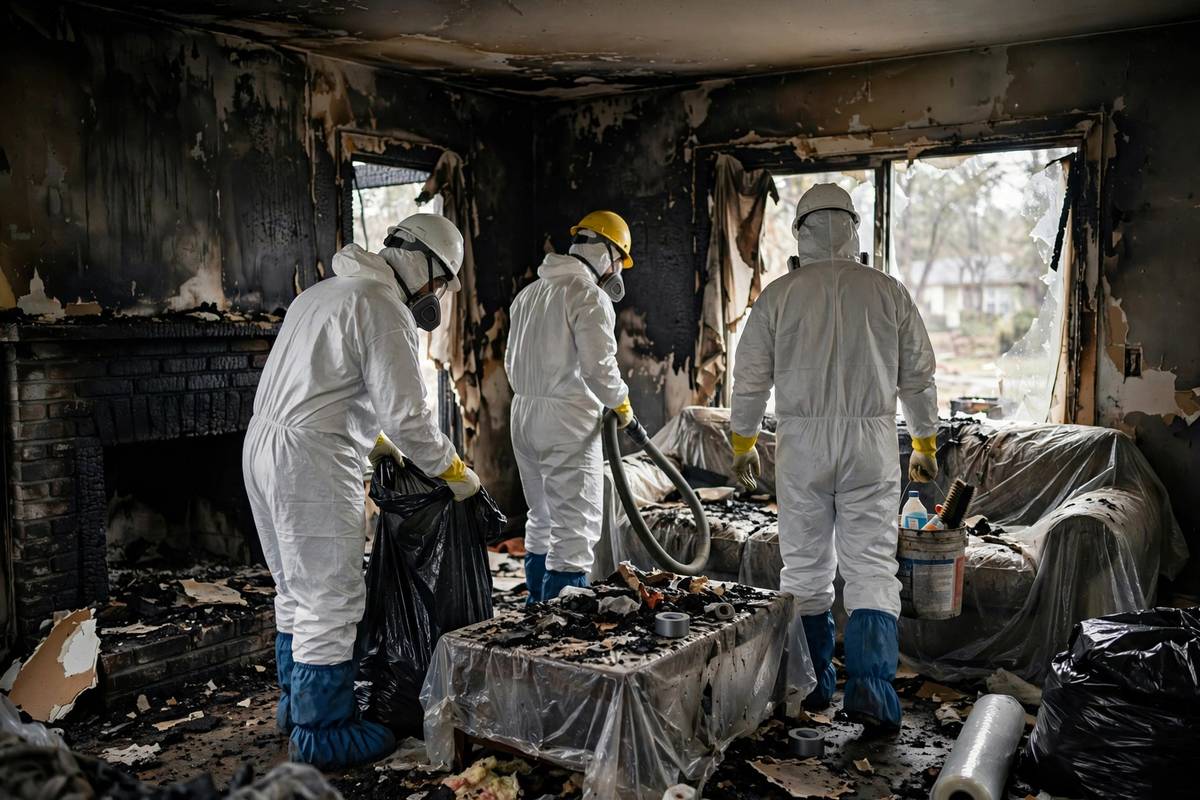
Typical cost ranges
| Job | Typical range | What moves it |
|---|---|---|
| Minor smoke cleanup (contained kitchen fire) | From about $800 | One room burned, protein smoke through balloon frame walls. The cavity check, not the kitchen, sets this scope. |
| Full restoration, typical home fire | $3,100 to $52,000 | Angi's 2026 national range across verified projects; the average project lands near $27,500. |
| Smoke and soot cleanup, including wall cavities | $4 to $7 per sq ft | Applied to the area cleaned, which in pre-war Newark stock includes cavity and attic reach the flames never saw. |
| Winter freeze protection (temporary heat or line draining) | Priced per job | The second loss line: keeping an opened, unheated home from adding a burst pipe claim to the fire claim. |
| Furnace puff back cleanup | Priced after duct assessment | Duct and furnace path cleaning by the right trades in sequence, then room by room soot removal. No structural burn, a different scope shape. |
Ranges are Angi's published 2026 national figures, not a quote for your home. Your number is built from an itemized scope after an in person assessment.
How insurance pays for this work
The deductible question
Fire is a named peril, so the deductible question is usually not whether to file but how the scope gets priced, and in Newark, how the second loss gets prevented. Your deductible applies once to the whole loss, and loss of use coverage, where carried, pays temporary housing on top of it. Keep every receipt from the first night, and keep the dated heat decision note with them.
Request a callback
Prefer to talk later? Leave your details and an independent local pro will call you back. No charge to you, no obligation.
Licking River Restoration is a free referral service. Submitting this form connects you with independent local contractors who provide the work.