Home · Services · Water Removal After a Fire
Water Removal After a Fire in Newark, OH
Quick answer
Extracting firefighting water from floors, walls, and basements and drying with logged moisture readings, so a Newark fire loss does not pick up a mold or warped-floor problem behind it.
Hundreds of gallons go into a structure during suppression, and in Newark the water is a freeze problem wearing a water problem's clothes. Water in walls, floors, and basements must come out fast for two reasons: the usual mold and material damage, and the winter reality that wet structure in an unheated, fire opened home freezes, splits plumbing, and adds a burst pipe loss to the fire loss. Homes down toward the river flats and the forks add low basements that take the water first. Extraction and drying are sequenced with the heat decision from the first night, and moisture readings are logged daily for the claim.
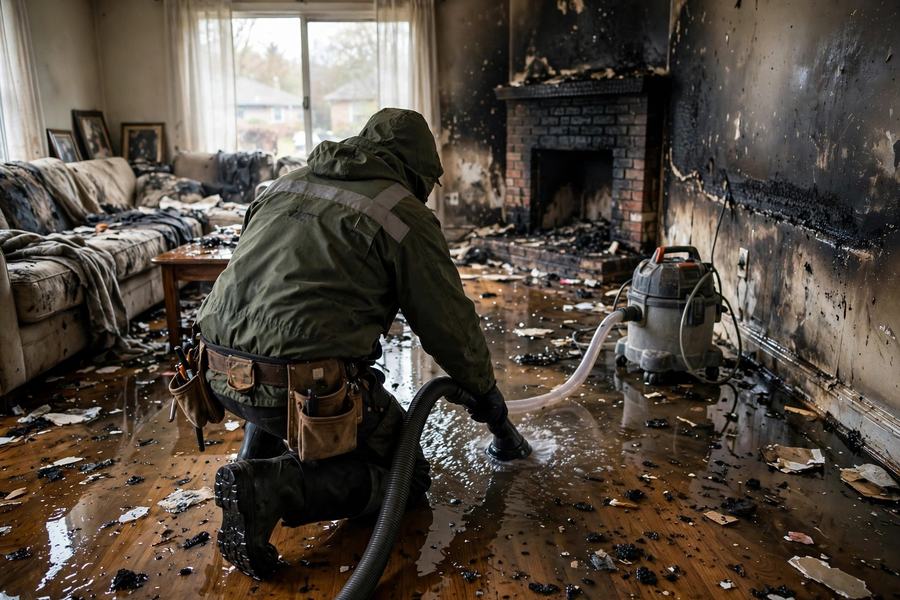
Signs you need water removal after a fire
- Standing water or soaked flooring in the rooms that burned and below them
- Water stains spreading on ceilings under the fire floor
- Wet insulation, drywall, and baseboards near the fire area
- A musty smell starting within a day or two of the fire
What the job involves
What affects the price
- How much water was used, which tracks with how long the fire burned
- How many levels the water reached, including the floor below the fire
- Materials involved: hardwood, laminate, and carpet over pad all dry differently
- Whether contaminated material must come out rather than dry
- Equipment days the moisture readings actually require
When it is an emergency
Firefighting water starts a mold clock of roughly 24 to 48 hours in warm conditions. The fire damage is the visible emergency, but the water sets the deadline: extraction and drying belong in the first scope of work, not a later phase.
(866) 490-2705Water Removal After a Fire across the Newark area
Related services
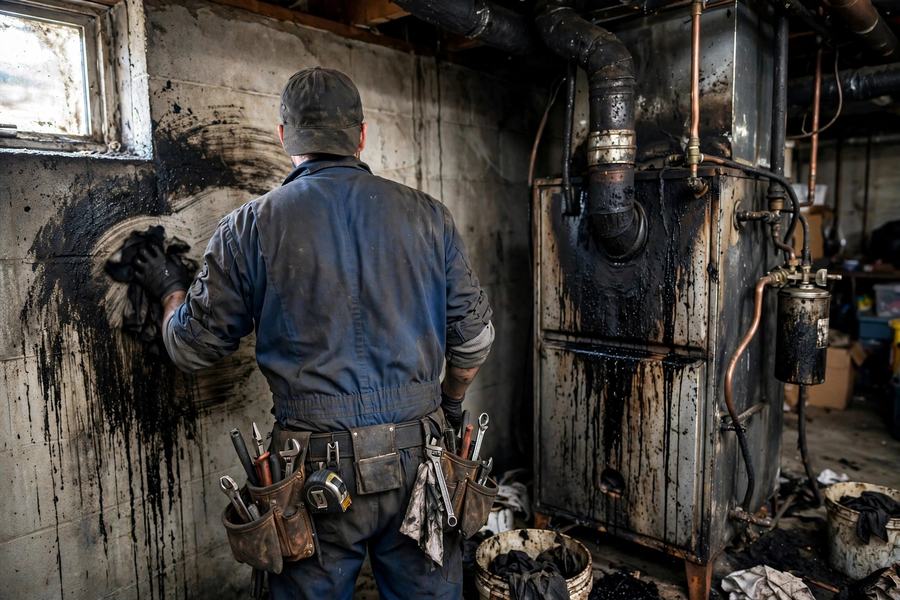
Furnace Puff Back Cleanup
Puff back cleanup for the oily soot a misfiring furnace or boiler blows through the duct system: ducts, registers, and every coated room cleaned so the system stops spreading it.
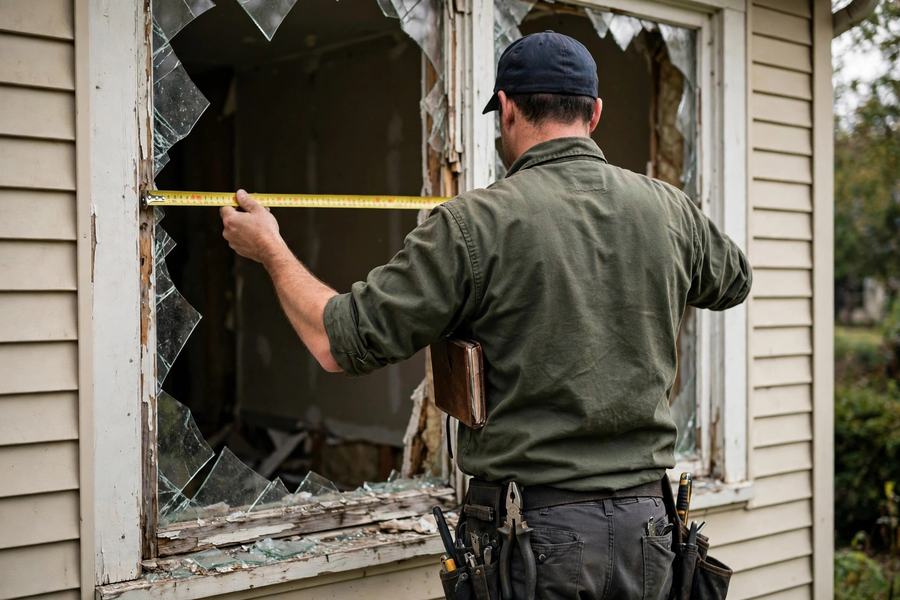
Emergency Board Up and Tarping
Same-day board up and roof tarping in Newark: broken windows and doors closed with fitted boards, roof damage covered, and the home locked and photographed before weather gets a turn.
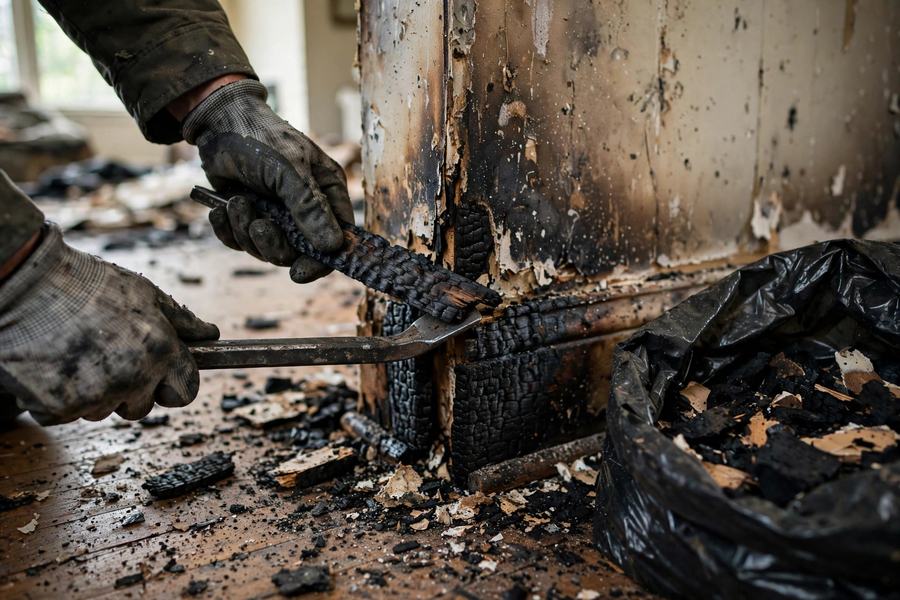
Fire Damage Restoration
Complete restoration after a Newark fire: the property secured, burned material removed, smoke and soot cleaned, the structure dried, and the rebuild carried through as one job.
Smoke Damage Cleanup
Smoke cleaning for homes where residue settled far from the burn room, up stairwells and into bedrooms: rooms assessed one by one and cleaned in the order the smoke traveled.
Water Removal After a Fire questions, answered
When is water removal after a fire an emergency?
Firefighting water starts a mold clock of roughly 24 to 48 hours in warm conditions. The fire damage is the visible emergency, but the water sets the deadline: extraction and drying belong in the first scope of work, not a later phase.
What affects the price of water removal after a fire in Newark?
The main price factors for water removal after a fire are covered in the cost section above. The contractor confirms the exact price in a written estimate after seeing the job, and nothing is owed until you approve it. The call and the referral are free.
Will insurance pay for temporary housing after a fire?
When a covered fire makes the home unlivable, the loss of use section of your policy pays the additional cost of living elsewhere: rent or a hotel, the increase in food spending, and similar documented expenses, up to your limit. Newark and the surrounding Licking County area have reasonable extended-stay options along the SR-79 and SR-16 corridors, but winter fires compress supply, so raise housing with your adjuster in the first conversation and ask about insurer-placed housing. Keep every receipt from the first night out; this coverage pays against documentation, and it covers added costs, not your mortgage or normal bills.
What is board up and why does it have to happen the same night?
Board up is closing the home the same day: plywood fitted over broken windows and doors, tarps anchored over roof openings, and locks secured. In Newark it cannot wait because of what follows a fire here: rain or snow through the roof, and in winter, a house without heat freezing its pipes and adding a burst-pipe loss to the fire loss. An open, empty, damaged house also invites theft and vandalism, and your policy requires reasonable steps to prevent further damage after a covered event. The work is photographed for the claim file and is normally covered as part of the loss.
Why is there soot in our Newark attic when the fire was in the kitchen?
Balloon framing. Many early-1900s Newark homes, the Hudson Avenue blocks and the West End among them, are framed with wall studs that run continuously from the basement sill to the attic, with no fire blocking between floors. Smoke and hot air from a first floor fire travel up those open cavities like chimneys and deposit soot in upstairs walls and the attic, in rooms the fire never entered. It is not a sign the fire was bigger than reported; it is how this construction breathes. The restoration scope has to map the cavities, which is why a Newark smoke estimate sometimes includes opening small inspection points at wall tops and bottoms.
Request a callback
Prefer to talk later? Leave your details and an independent local pro will call you back. No charge to you, no obligation.
Licking River Restoration is a free referral service. Submitting this form connects you with independent local contractors who provide the work.