Home · Services · Kitchen Fire Cleanup
Kitchen Fire Cleanup in Newark, OH
Quick answer
Cleanup for kitchen fires, the most common house fire in Licking County: grease and protein residue on cabinets, walls, and ceilings, plus odor treatment aimed at the source, not the symptom.
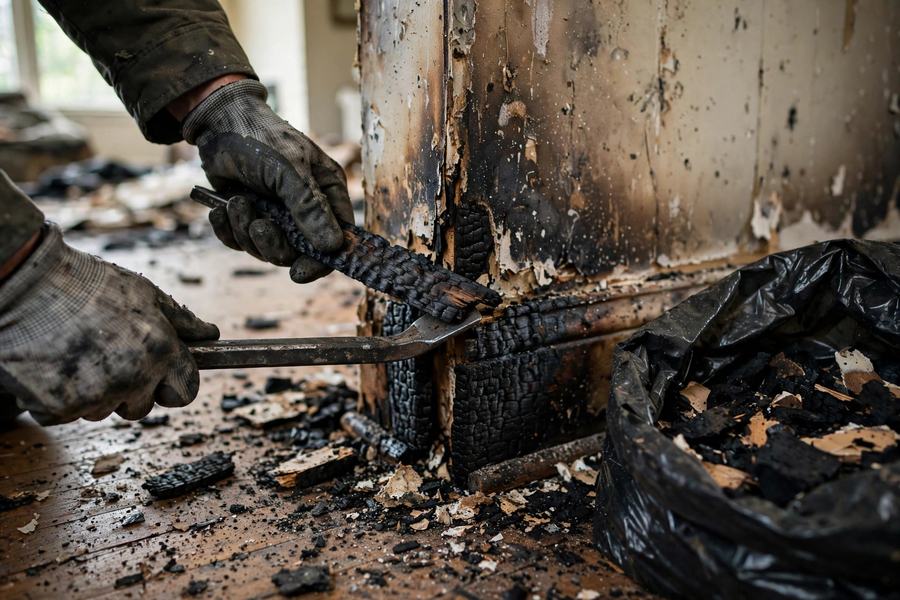
Kitchen fires are the commonest residential fire in Licking County: a stovetop event in an early-1900s Newark kitchen or a post-war Heath ranch, contained flames, and protein smoke through balloon frame walls into rooms the fire never saw. The visible damage is the smallest part of the scope. Residue testing comes before any wiping, because protein smoke sets into painted plaster with the wrong first pass, and the duct and furnace path gets checked because forced air carries the odor house wide.
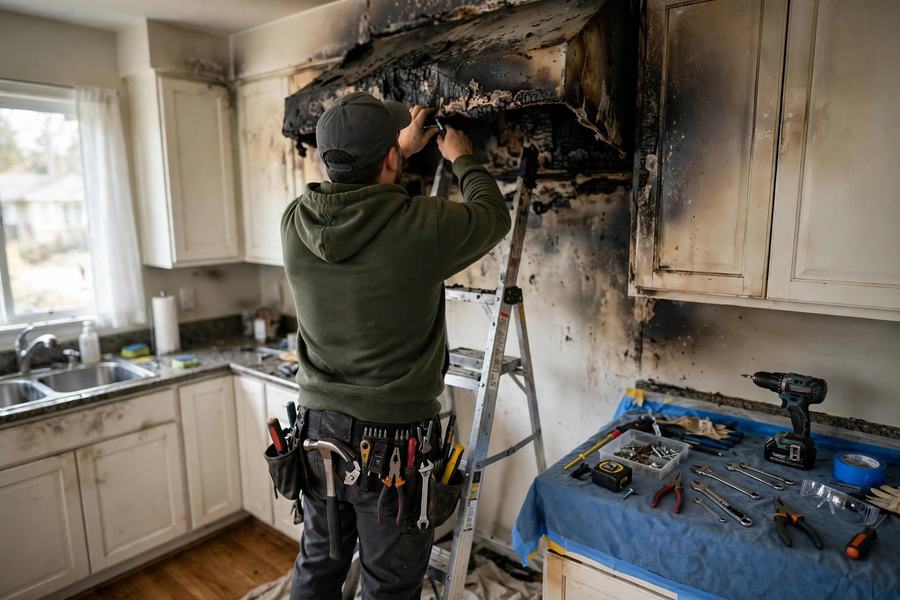
Signs you need kitchen fire cleanup
- A stovetop or oven fire blackened the kitchen or set off alarms through the house
- An invisible but powerful burnt food smell fills rooms far from the kitchen
- Cabinets, appliances, and ceilings near the stove carry greasy film
- The fire was put out with an extinguisher and its residue is everywhere
What the job involves
What affects the price
- How long the food or grease burned, which sets the odor load
- Whether flames left the stovetop (cabinets, range hood, ceiling)
- How many rooms the protein smoke reached
- Appliance count and condition
- Whether ducts carried the smell through the home
When it is an emergency
A kitchen fire that looks minor can be the most deceptive fire loss: protein smoke is nearly invisible and its odor is the hardest to remove. If the smell is strong in rooms the fire never reached, the cleanup scope is the whole home, not the kitchen. Do not run the range hood or HVAC before the assessment; both spread it.
(866) 490-2705Kitchen Fire Cleanup across the Newark area
Related services
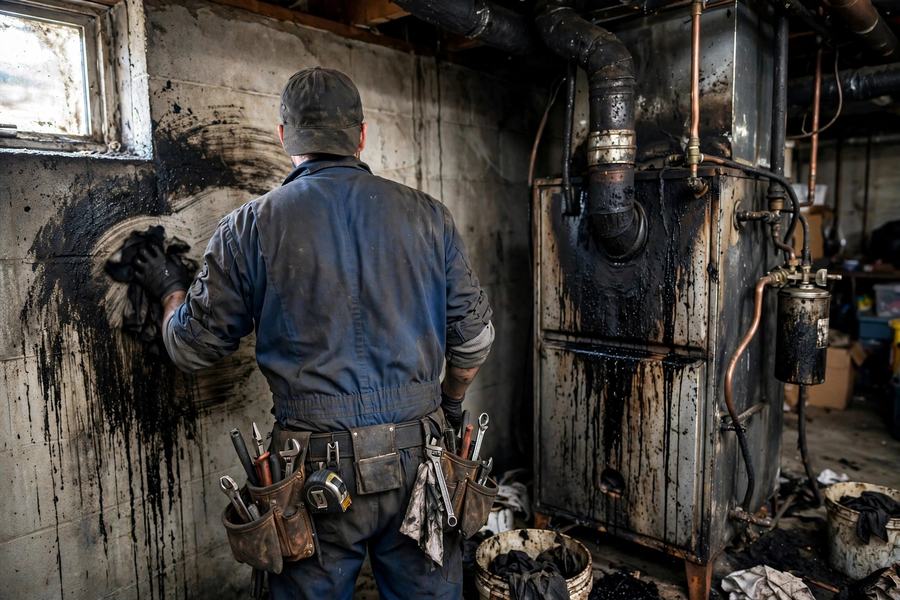
Furnace Puff Back Cleanup
Puff back cleanup for the oily soot a misfiring furnace or boiler blows through the duct system: ducts, registers, and every coated room cleaned so the system stops spreading it.
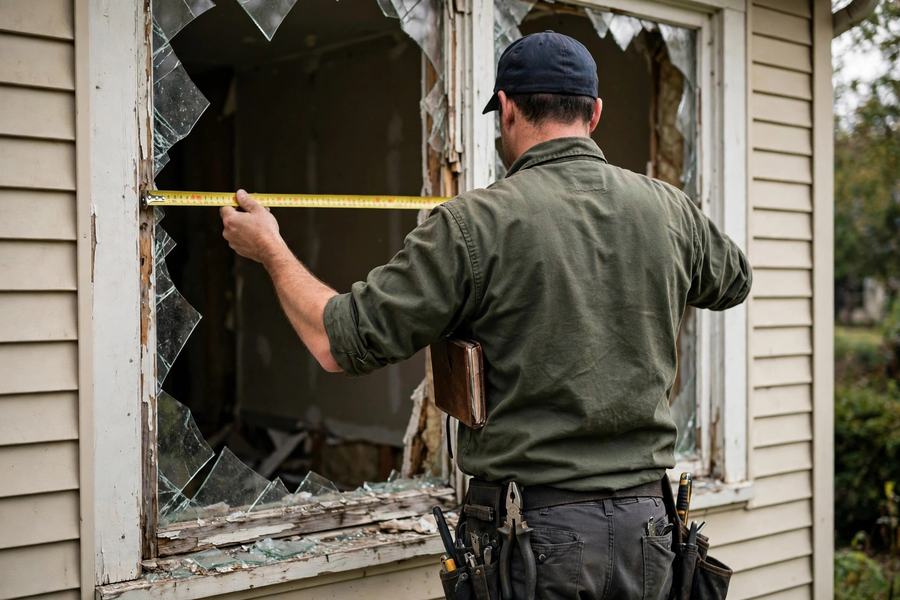
Emergency Board Up and Tarping
Same-day board up and roof tarping in Newark: broken windows and doors closed with fitted boards, roof damage covered, and the home locked and photographed before weather gets a turn.
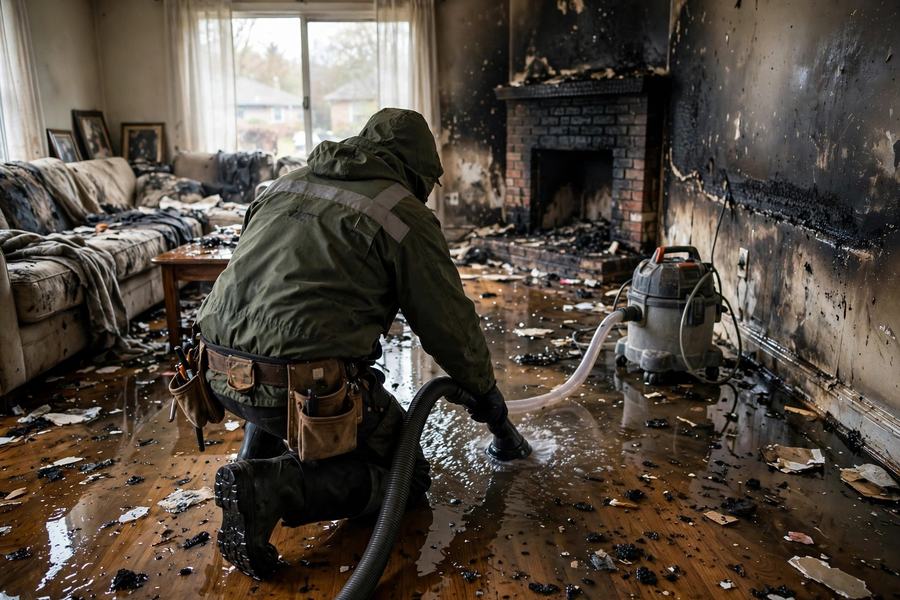
Water Removal After a Fire
Extracting firefighting water from floors, walls, and basements and drying with logged moisture readings, so a Newark fire loss does not pick up a mold or warped-floor problem behind it.
Fire Damage Restoration
Complete restoration after a Newark fire: the property secured, burned material removed, smoke and soot cleaned, the structure dried, and the rebuild carried through as one job.
Kitchen Fire Cleanup questions, answered
When is kitchen fire cleanup an emergency?
A kitchen fire that looks minor can be the most deceptive fire loss: protein smoke is nearly invisible and its odor is the hardest to remove. If the smell is strong in rooms the fire never reached, the cleanup scope is the whole home, not the kitchen. Do not run the range hood or HVAC before the assessment; both spread it.
What affects the price of kitchen fire cleanup in Newark?
The main price factors for kitchen fire cleanup are covered in the cost section above. The contractor confirms the exact price in a written estimate after seeing the job, and nothing is owed until you approve it. The call and the referral are free.
How long does fire restoration take?
Emergency work happens first and fast: board up, tarping, and water extraction on day one, drying over several days with logged readings. Cleaning, soot, smoke, odor, and contents, generally takes one to two weeks. The rebuild is the long phase: a room can be a few weeks, while structural repairs with permits and inspections can take several months, and older Newark homes can add time when code upgrades join the scope. Most moderate fires here are fully resolved in about two to four months. Getting the contractor and adjuster scopes reconciled in the first week is the schedule move that matters most.
Can I clean soot and smoke damage myself?
Take the photographs and write the inventory; leave the soot to the crew. Soot is acidic, and the wrong cleaner drives it into paint, plaster, and drywall, turning a liftable residue into a permanent stain. Residue from burned plastics and foams is also a genuine breathing hazard during hours of scrubbing. Professionals test a hidden patch first, begin with dry sponges, and choose wet methods per surface. One Newark-specific trap: do not run the furnace to take the chill off before the ducts are checked. A smoke-filled system will coat clean rooms in an afternoon.
Will insurance pay for temporary housing after a fire?
When a covered fire makes the home unlivable, the loss of use section of your policy pays the additional cost of living elsewhere: rent or a hotel, the increase in food spending, and similar documented expenses, up to your limit. Newark and the surrounding Licking County area have reasonable extended-stay options along the SR-79 and SR-16 corridors, but winter fires compress supply, so raise housing with your adjuster in the first conversation and ask about insurer-placed housing. Keep every receipt from the first night out; this coverage pays against documentation, and it covers added costs, not your mortgage or normal bills.
Request a callback
Prefer to talk later? Leave your details and an independent local pro will call you back. No charge to you, no obligation.
Licking River Restoration is a free referral service. Submitting this form connects you with independent local contractors who provide the work.